
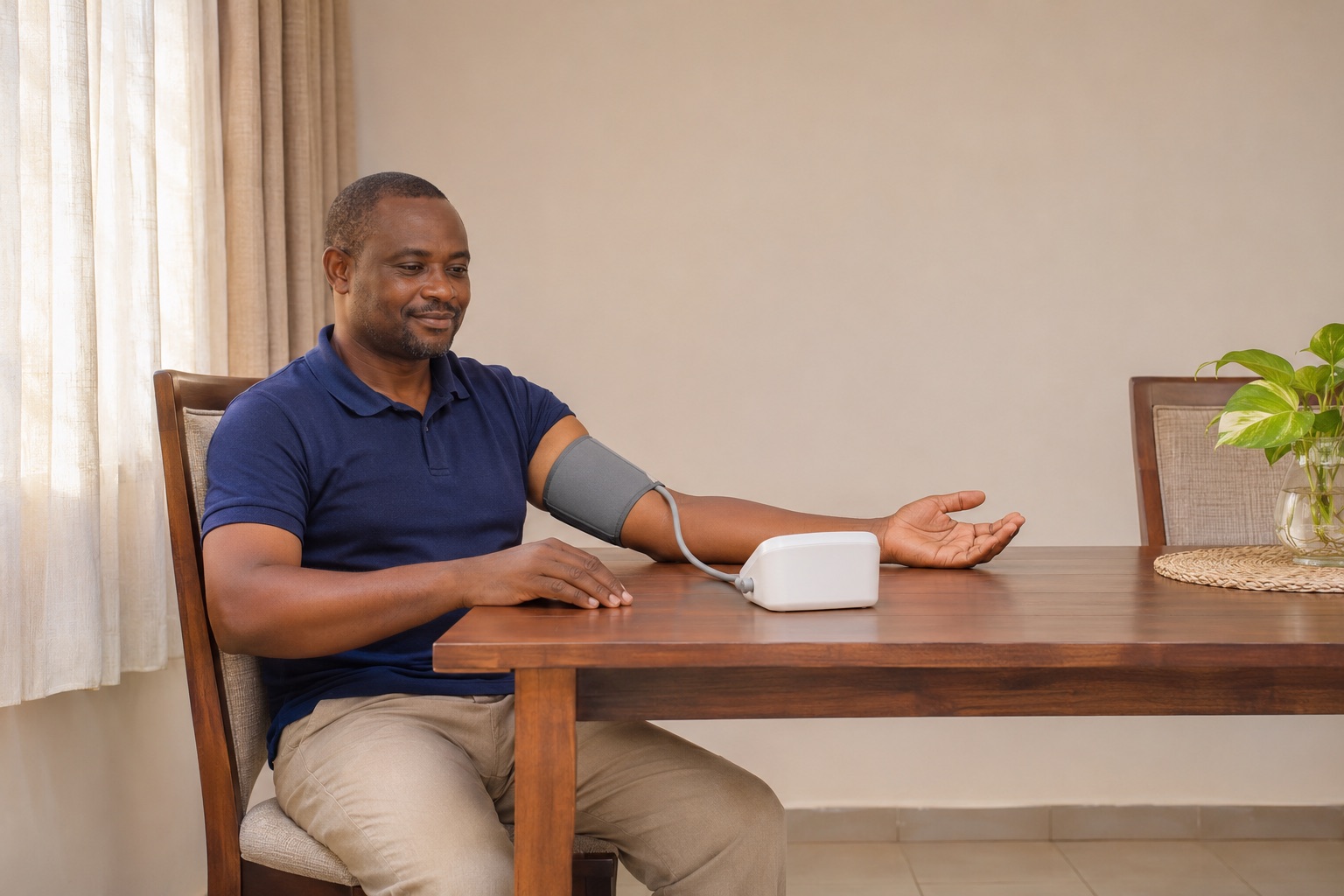
It is easy to get an unreliable blood pressure reading if you use the wrong cuff size, talk during the check or measure just after rushing around. A few simple steps can help you get readings your healthcare team can use.
Look for an automatic upper-arm blood pressure monitor that has been independently checked for accuracy. Measure around your upper arm and compare it with the size range on the cuff. Ask a pharmacist or clinician for help choosing a monitor if you are unsure. Use an upper-arm cuff for routine home checks. Wrist devices and cuffless readings from watches or phone apps can be unreliable. [1][2]
If your clinician asks you to check for several days to confirm high blood pressure, a common schedule is two readings each morning and two each evening for at least four days, ideally seven. Under this approach, the first day is left out of the average. Keep all the readings so your clinician can review them. If you already have hypertension, ask how often you should check at home. The schedule may change after a medication adjustment. [3]
The home average used to help confirm hypertension is commonly 135/85 mmHg or higher when clinic readings are also elevated. Either number can be high. Share repeated high readings with your clinician and ask how they compare with your personal target. [2][3]
If the top number is 180 or higher or the bottom number is 120 or higher and you feel well, wait at least a minute and repeat it. If it is still that high, contact a healthcare professional immediately for urgent advice. Call local emergency services straight away for symptoms such as chest pain, severe trouble breathing, sudden weakness or difficulty speaking. Seek urgent advice from your maternity team about high readings during pregnancy or soon after birth. [1][3]
If you would like help reviewing a series of readings, ask Wazima about a routine online consultation. You can also ask about compatible connected screening devices and how to share your results with a healthcare professional. Explore Wazima Health services.


Copyright © 2026 Wazima Health LTD
At Wazima Health, we use cookies to enhance your experience and ensure secure access to our services. By continuing to use our site, you agree to our use of cookies and the handling of your data in accordance with our Privacy Policy.