
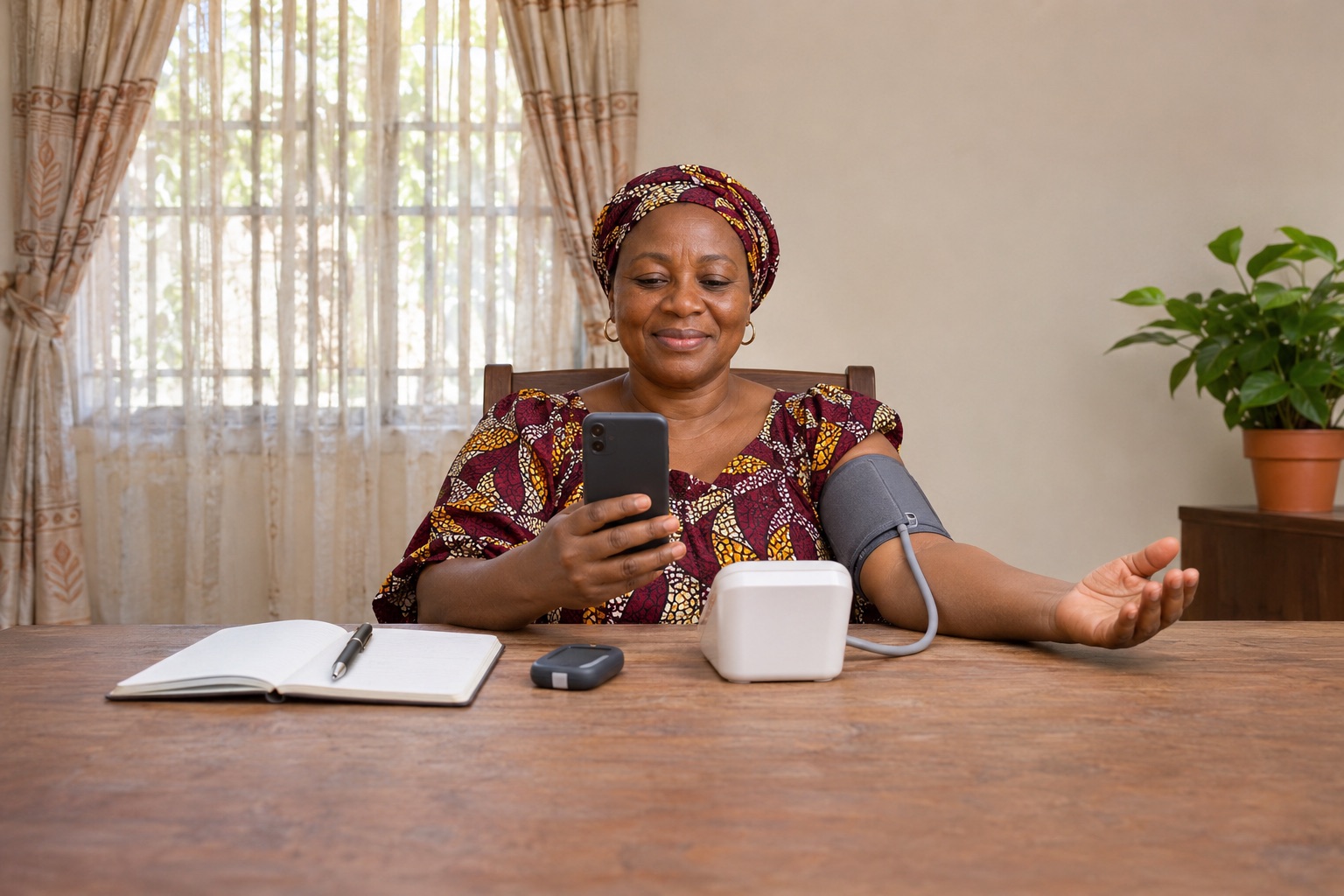
Living with high blood pressure or diabetes means making decisions between appointments. Is your blood pressure still high after a change in medication? How often do you need to check your blood sugar? A home monitor and an online follow-up can help answer these questions when you and your healthcare team agree what to measure, who will review the results and when to act.
Remote patient monitoring lets you collect health readings at home or at a community screening point and share them with your healthcare team. A compatible device may send results to an app. You can also record readings by hand and share them at your next appointment. Either way, a series of reliable readings gives your clinician a better picture of what happens between visits.
For example, your blood pressure may be higher in the clinic because you feel anxious. A short series of home readings can help your clinician see whether it is also high during your usual routine. In a UK primary care trial, patients whose clinicians used home readings to guide treatment had lower blood pressure after a year than those receiving usual clinic-based care. The trial tested a structured care approach. [1][2]
Use a validated upper-arm cuff that fits. Ask your healthcare team when and how often to measure, and what readings should prompt a call. Keep a record of the dates, times and both numbers. If you recently started a new medicine, mention any dizziness, missed doses or side effects when you share your readings. Your clinician can use that information to decide whether your plan needs a change. [2]
For some people, especially those who take insulin, checking blood glucose at home is an important part of daily care. A finger-prick meter gives a reading at that moment. A continuous glucose monitor uses a small sensor to show how glucose changes over time and may be appropriate for some patients. Many people with type 2 diabetes who do not take insulin do not need routine finger-prick checks. Ask your clinician what makes sense for your treatment and what to do if your readings are too high or low. [3]
Keep your scheduled HbA1c tests, which show your average blood sugar over roughly the past two to three months, and attend the eye, kidney and foot checks your care team recommends. Your healthcare team can tell you which follow-ups can be done online and which need a lab test or an in-person visit. [3][4]
Wazima Health brings connected screening, health records and online consultations together. You can ask about compatible devices for sharing readings, what screening is available in your area and how to arrange a follow-up with a healthcare professional. A consultation is also a chance to discuss medication, ask about a referral and agree on the next check. Explore Wazima Health services.
Before you start sharing readings, ask who will see them and how quickly to expect a reply. For emergency symptoms such as chest pain, severe shortness of breath or sudden weakness or difficulty speaking, call local emergency services immediately.


Copyright © 2026 Wazima Health LTD
At Wazima Health, we use cookies to enhance your experience and ensure secure access to our services. By continuing to use our site, you agree to our use of cookies and the handling of your data in accordance with our Privacy Policy.